Making a visual
FYI: I had Claude create this page for me based on the session history from a long conversation on decision models. The lead/summary for each section is generated. This page basically just exists to illustrate what the process can look like.
This page shows every iteration behind the two interactive visuals in Understanding Jev and System 1 Models, with each round moving from my feedback to AI-built candidates and another review.
1Ten takes on a galaxy
I spoke a starting brief that combined an ambiguous use of "free", backward attention arrows, a galaxy of words that lights up by meaning, a model filling with context and a generated continuation, then AI produced ten interpretations.
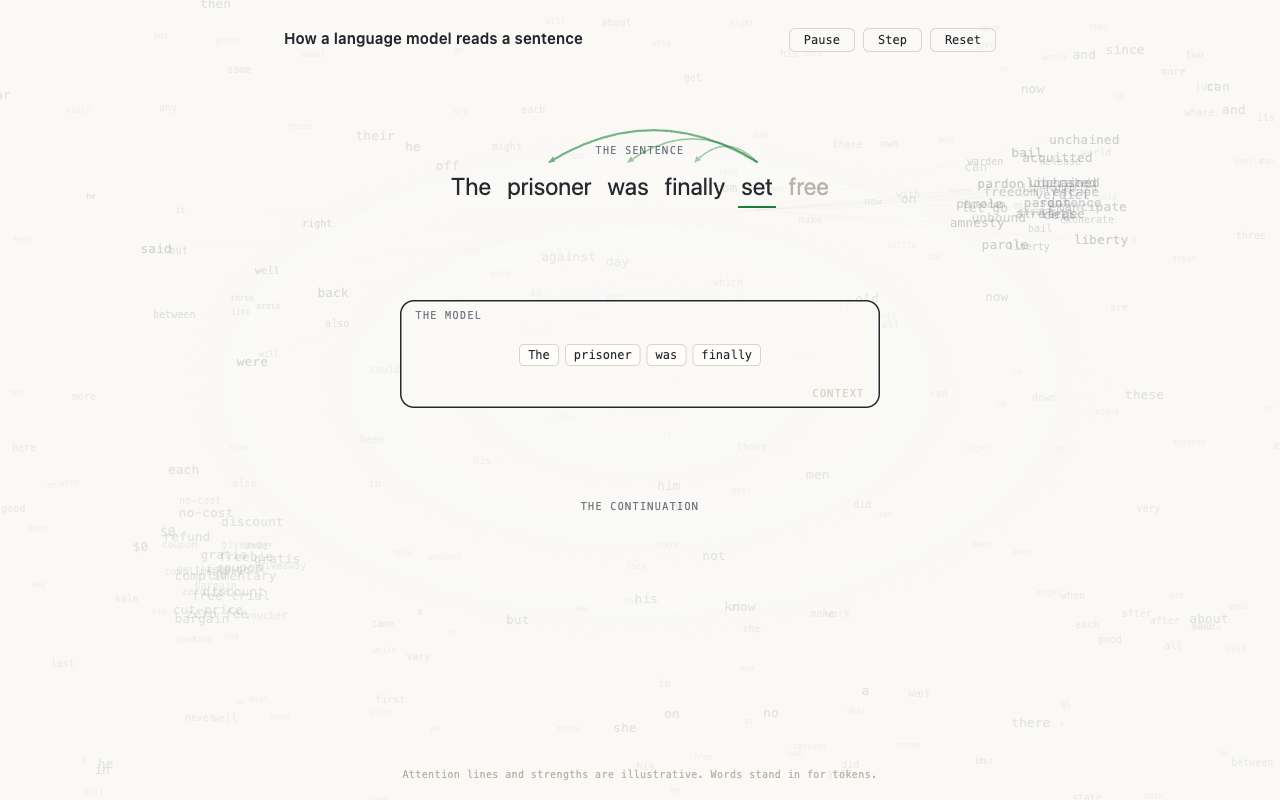 v01 canvas paper
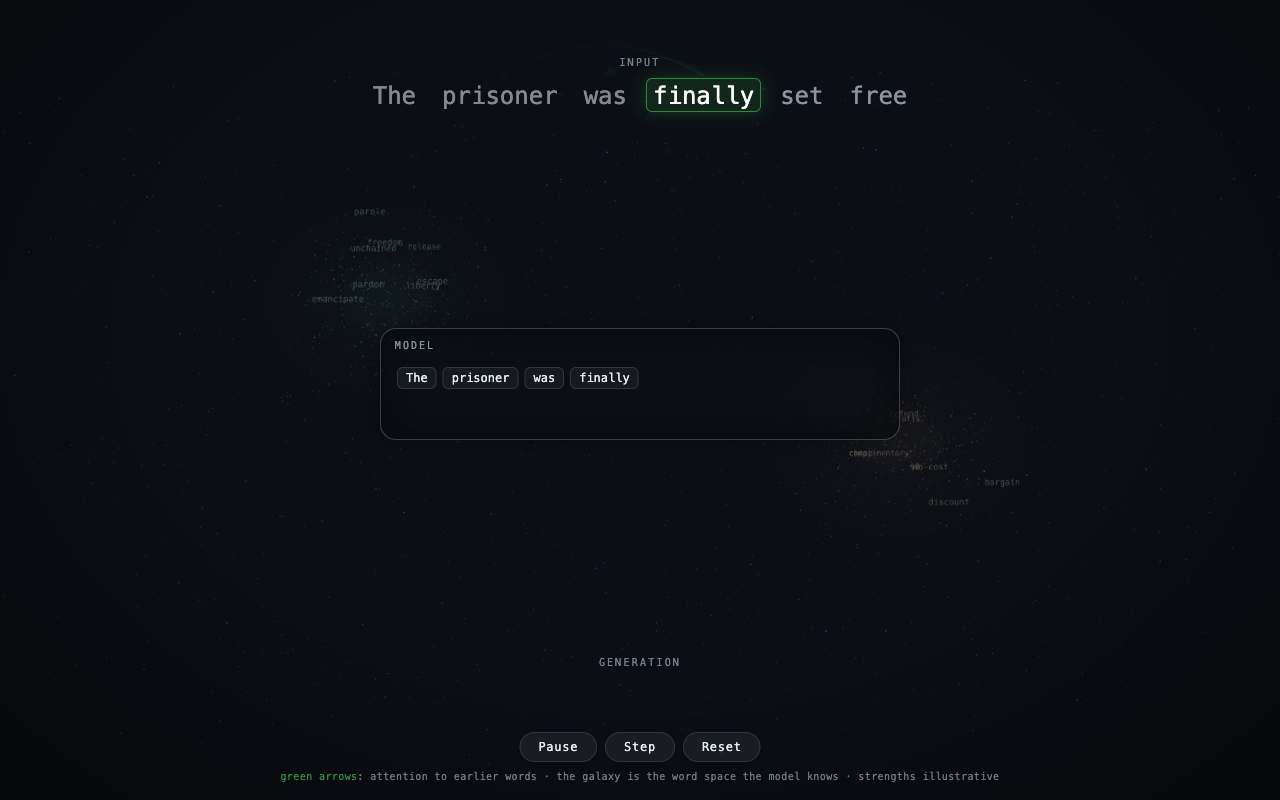 v02 three.js galaxy
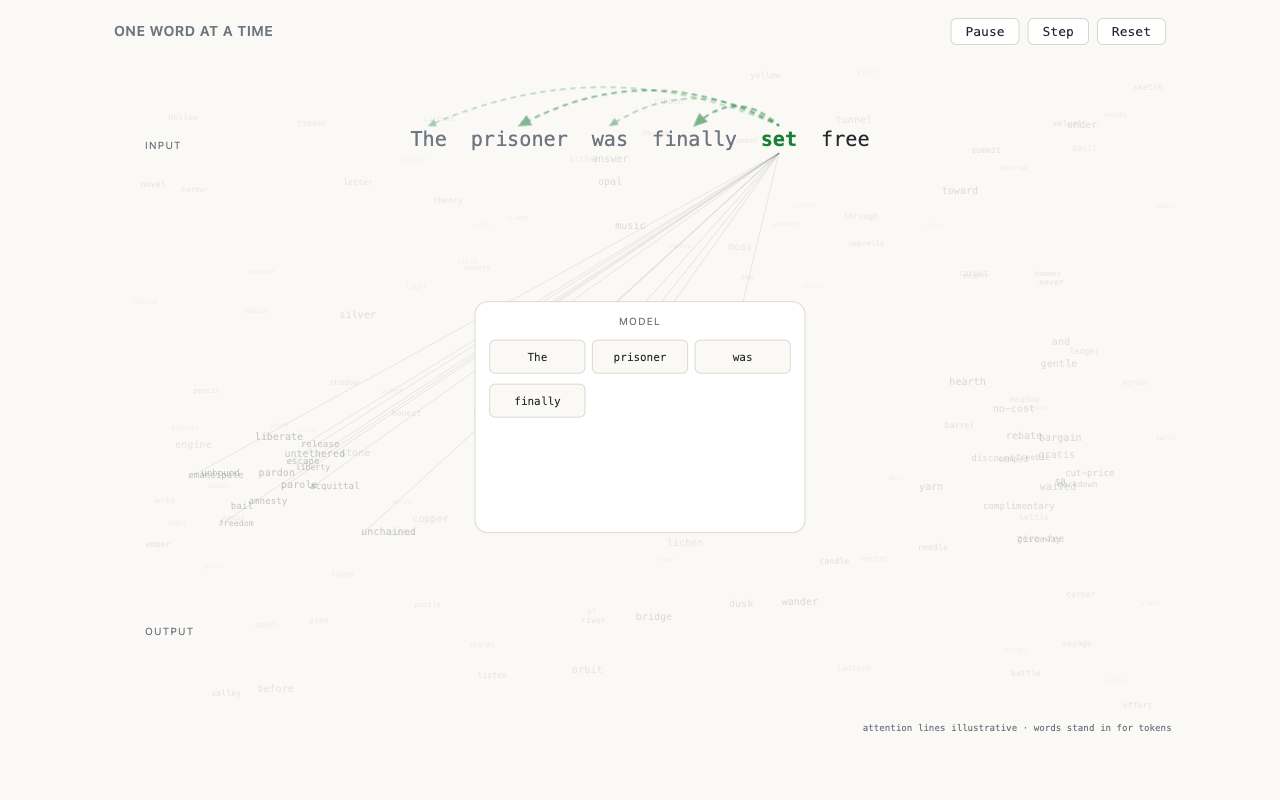 v03 svg minimal
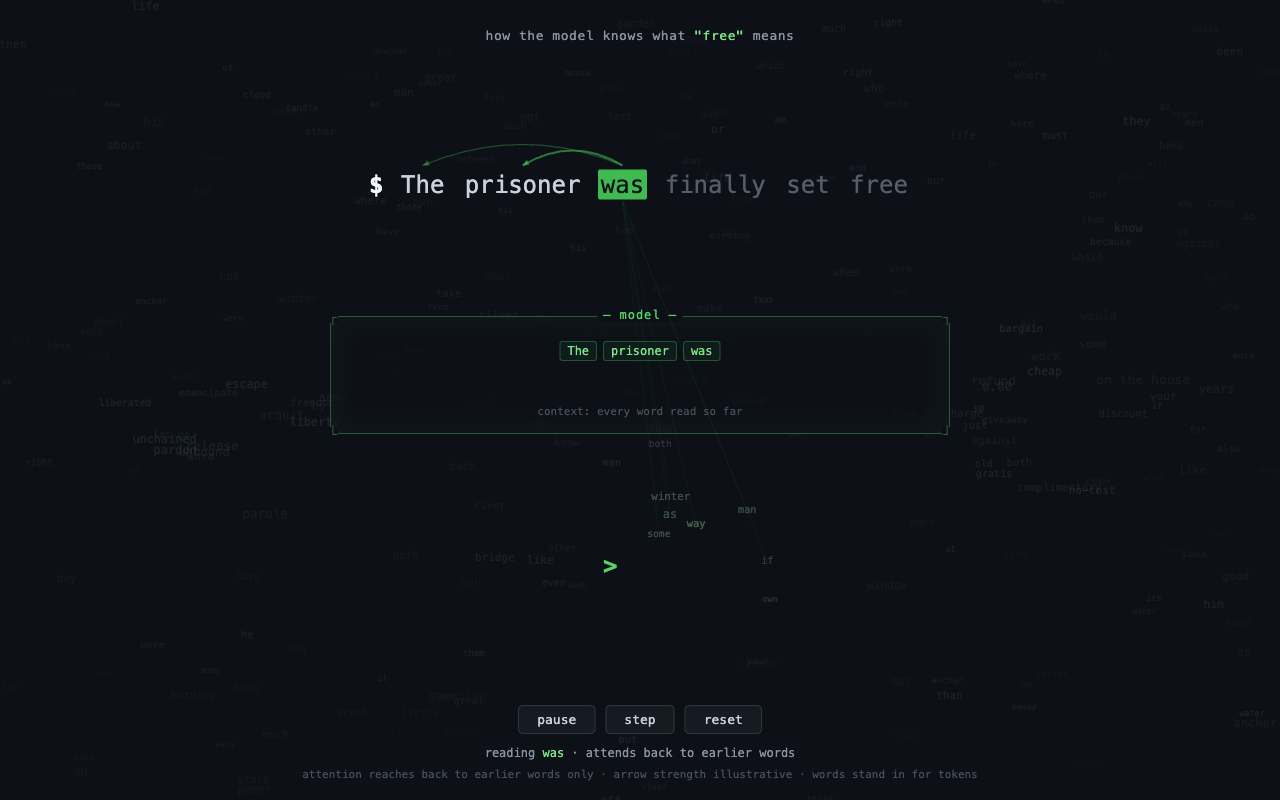 v04 dark terminal
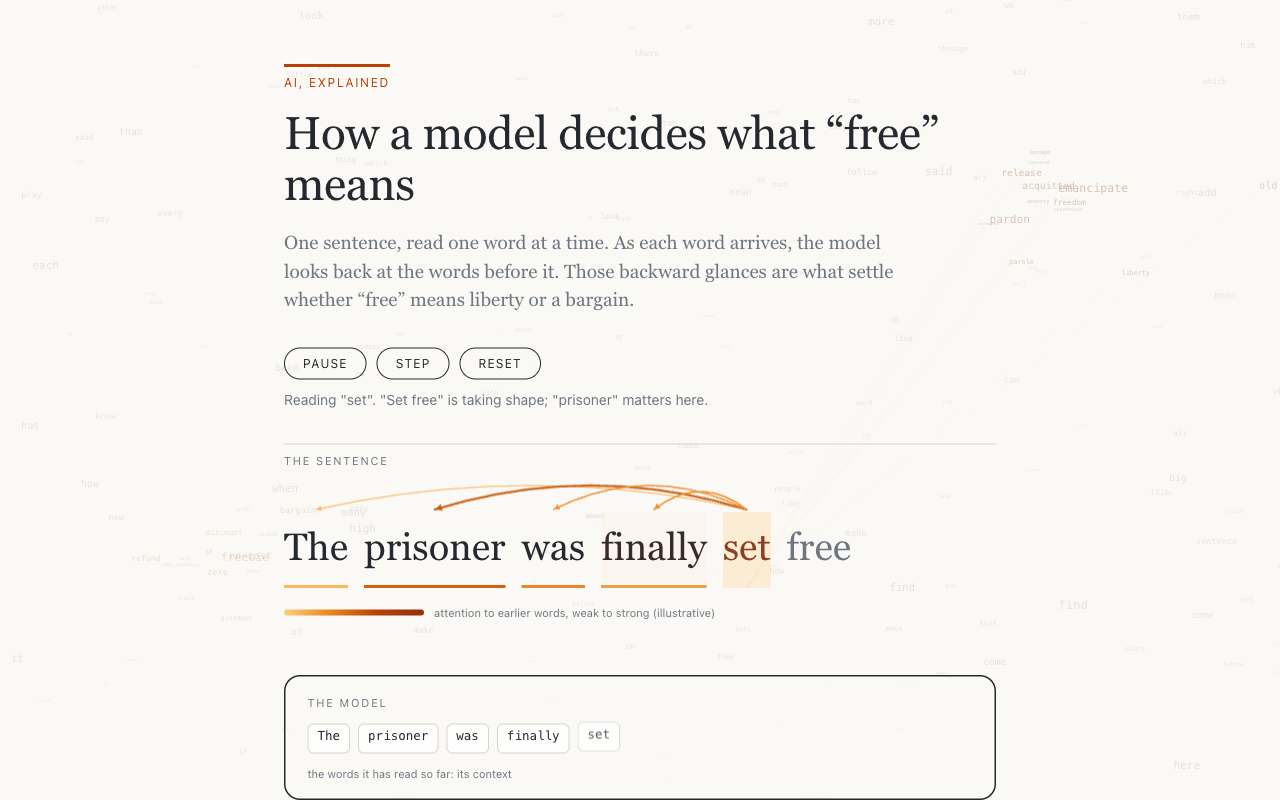 v05 editorial
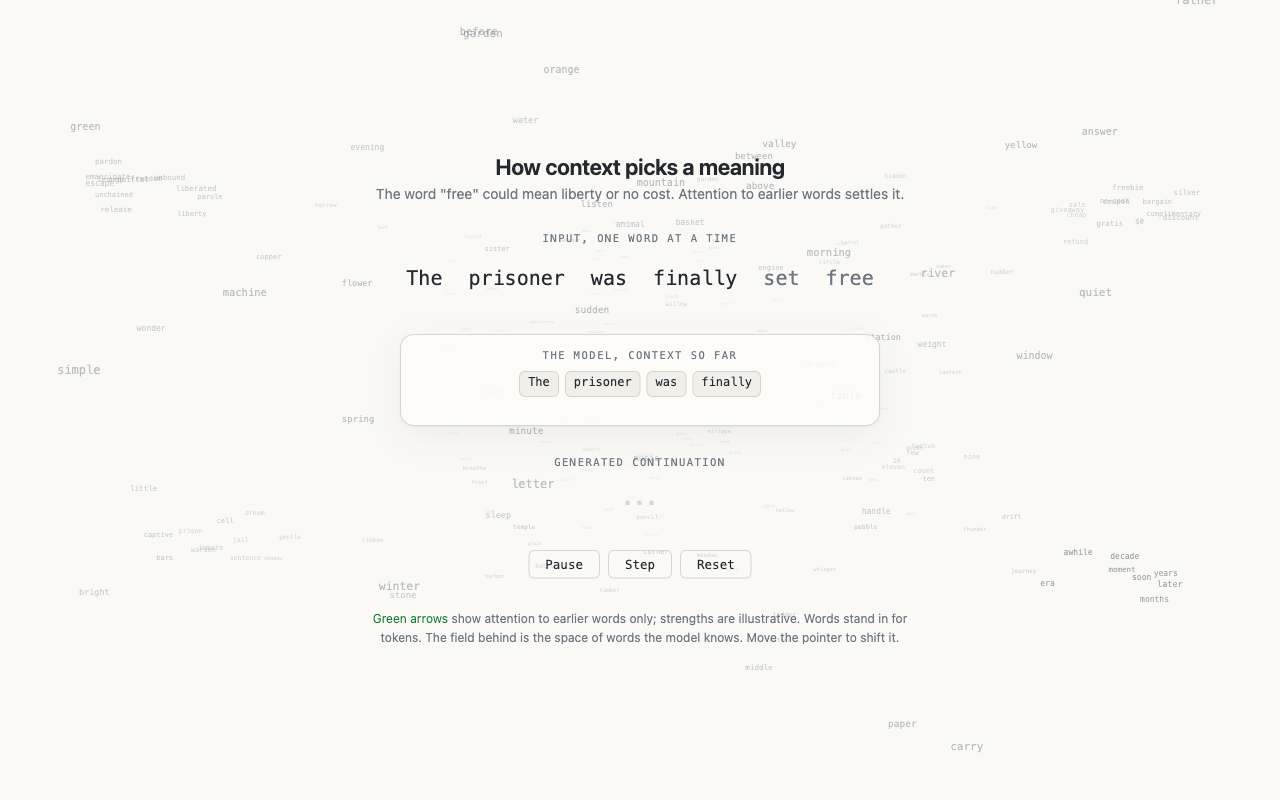 v06 parallax depth
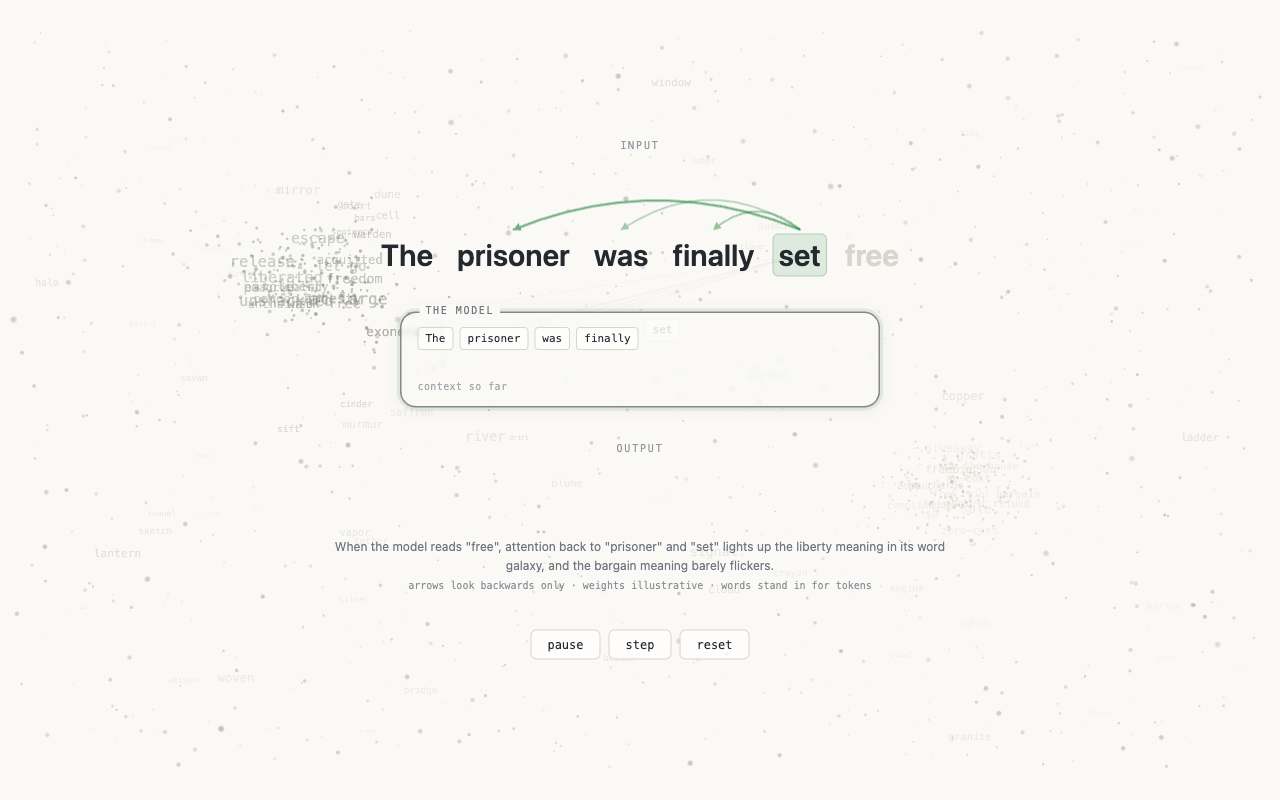 v07 light webgl
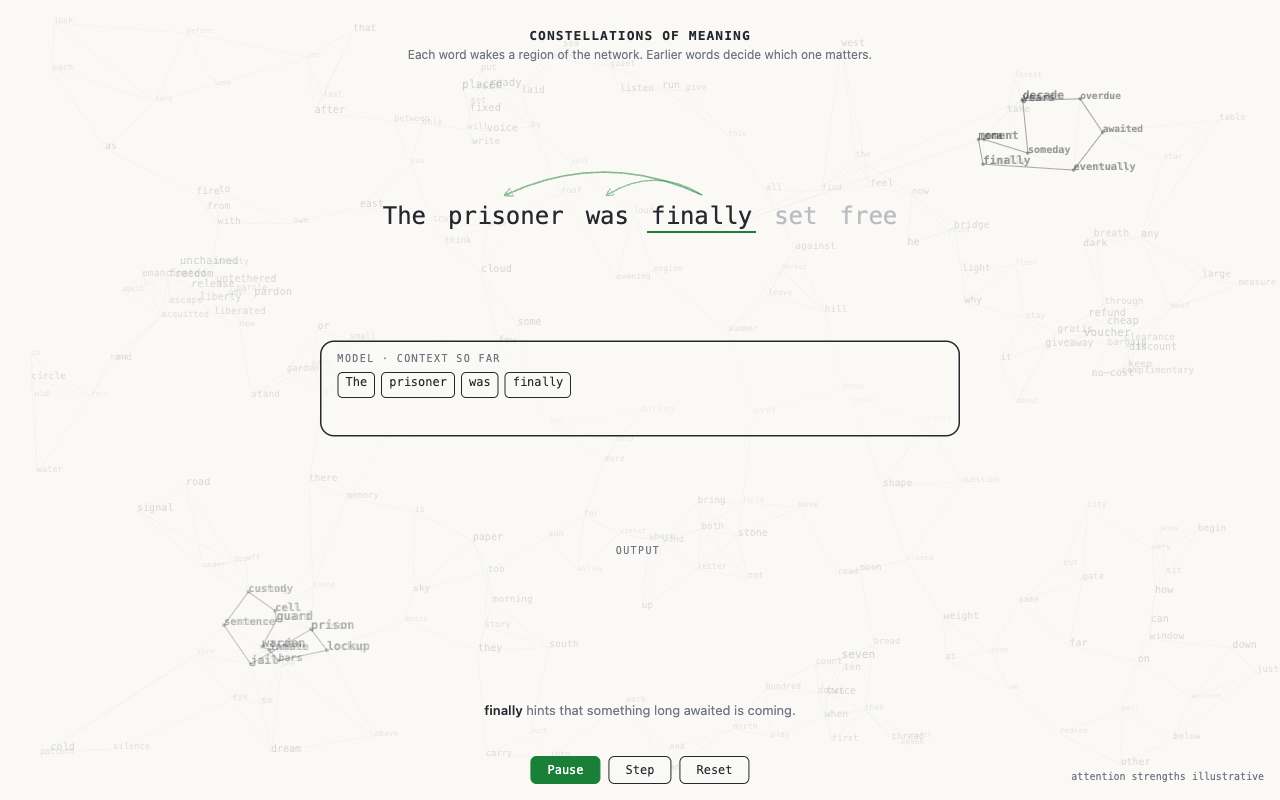 v08 constellation
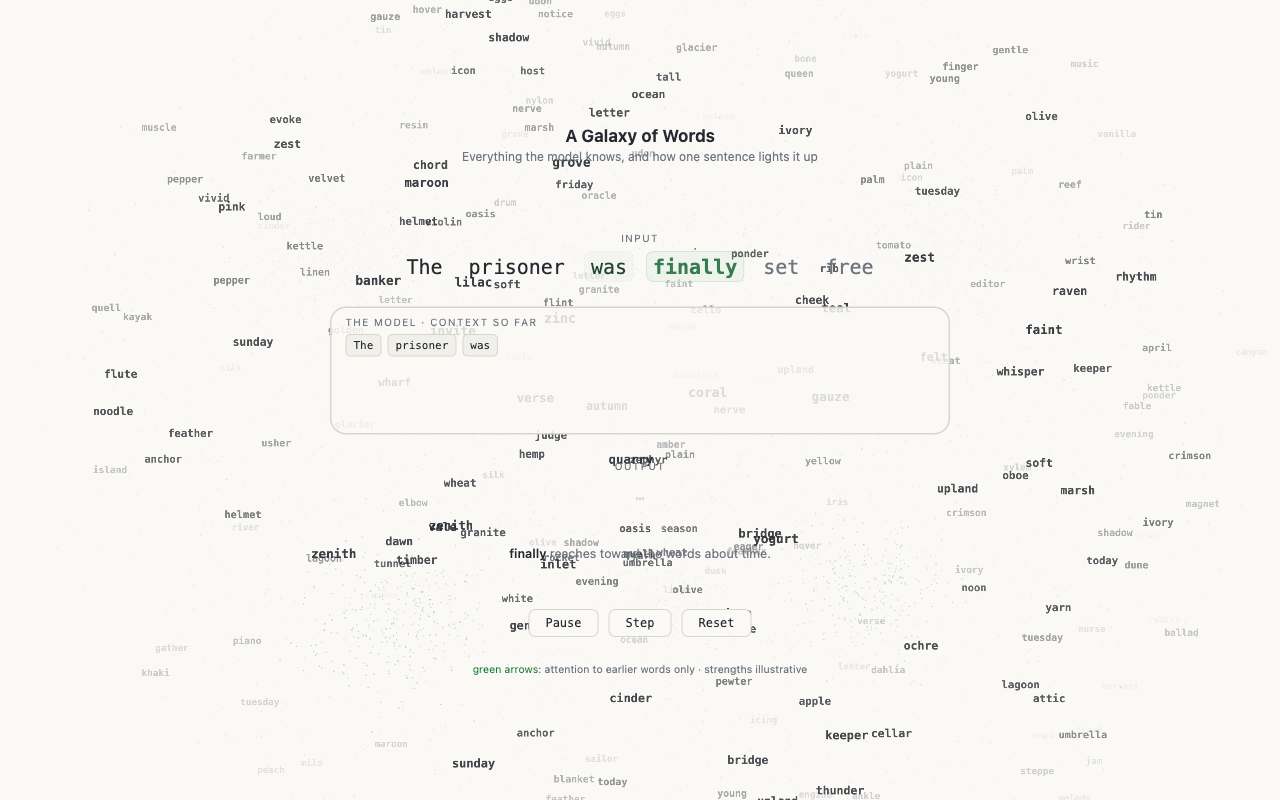 v09 dense field
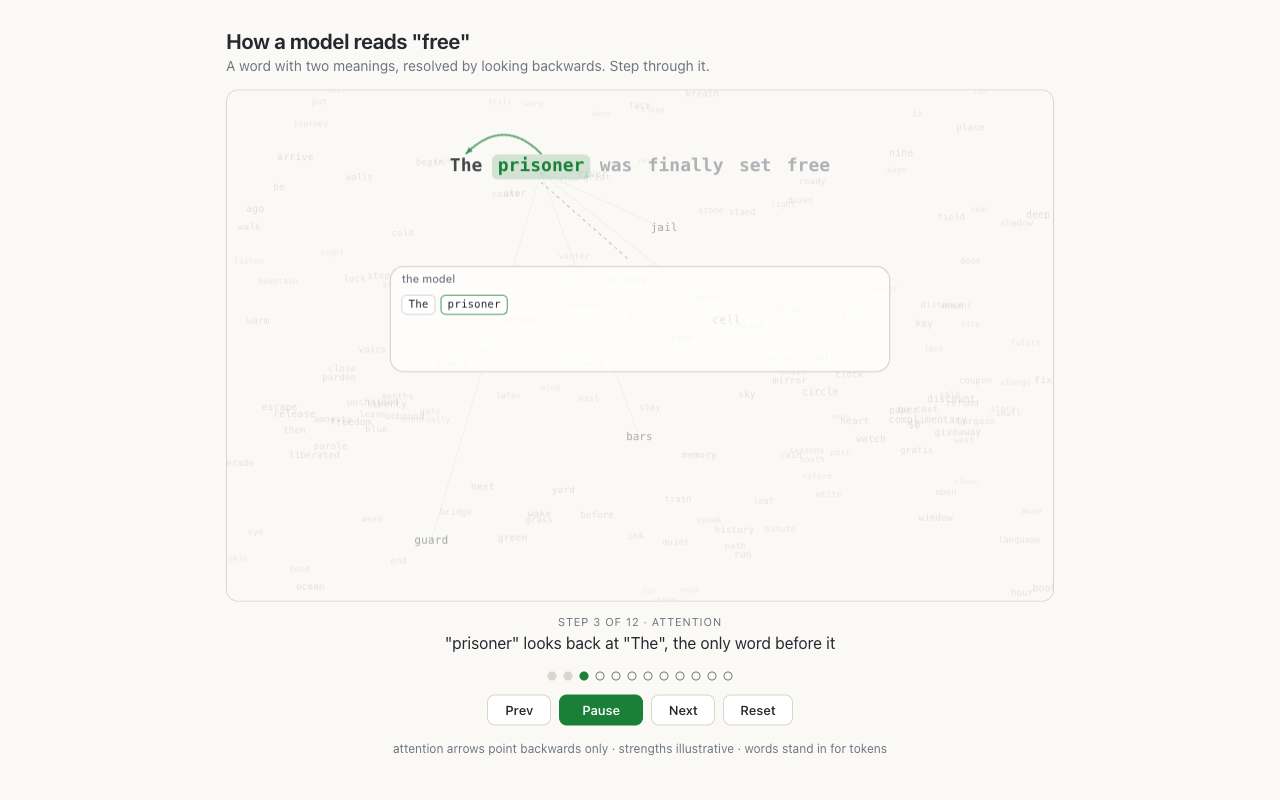 v10 step player
2The spin
I asked for boxed input words, a closer and denser galaxy that spins related words above the sentence, and a model box containing a blue weights matrix and wrapping context row.
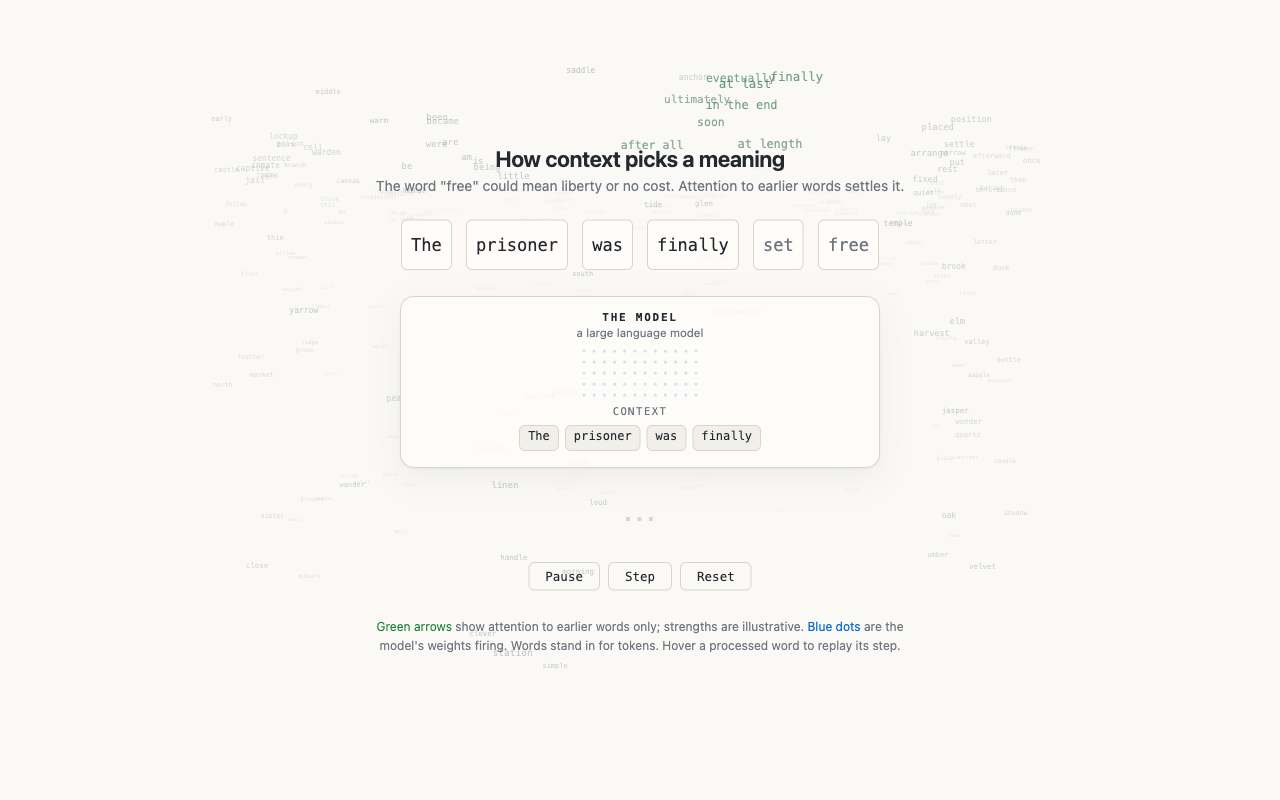 w01 canvas heir
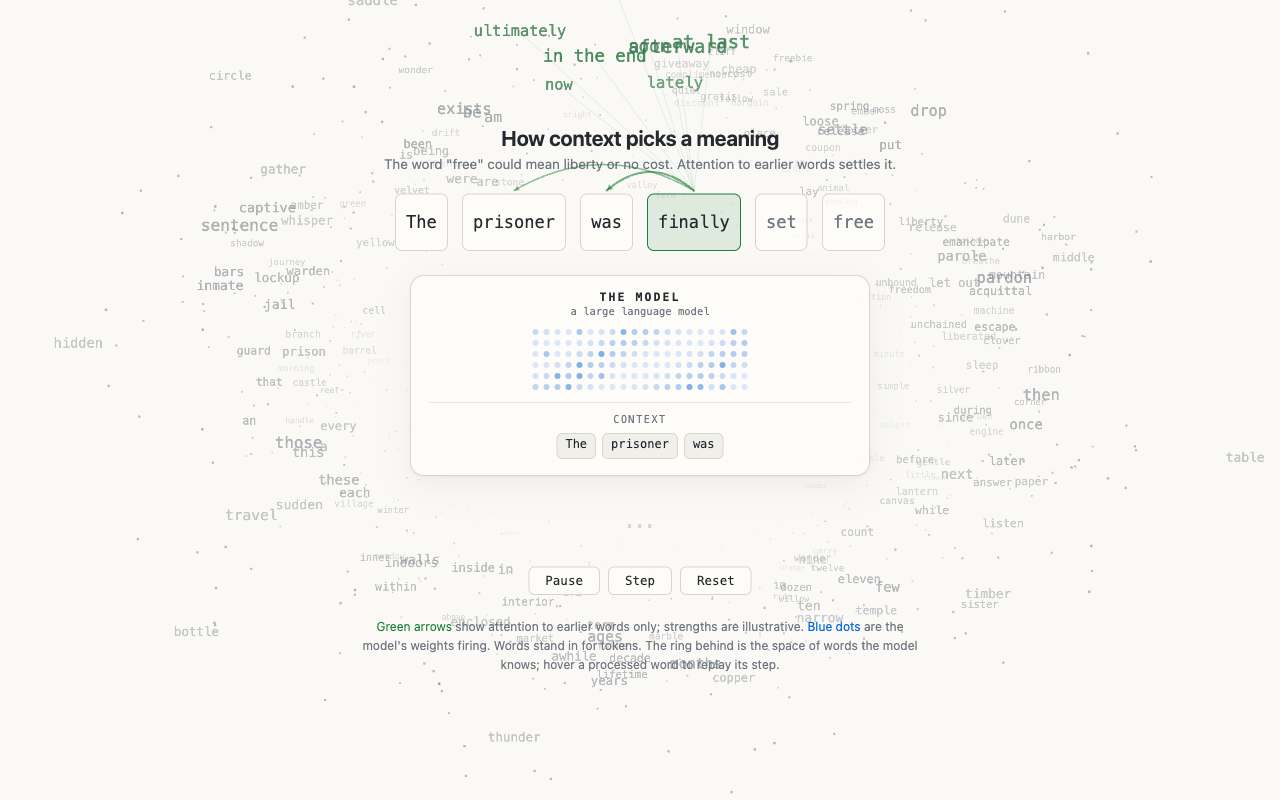 w02 ring
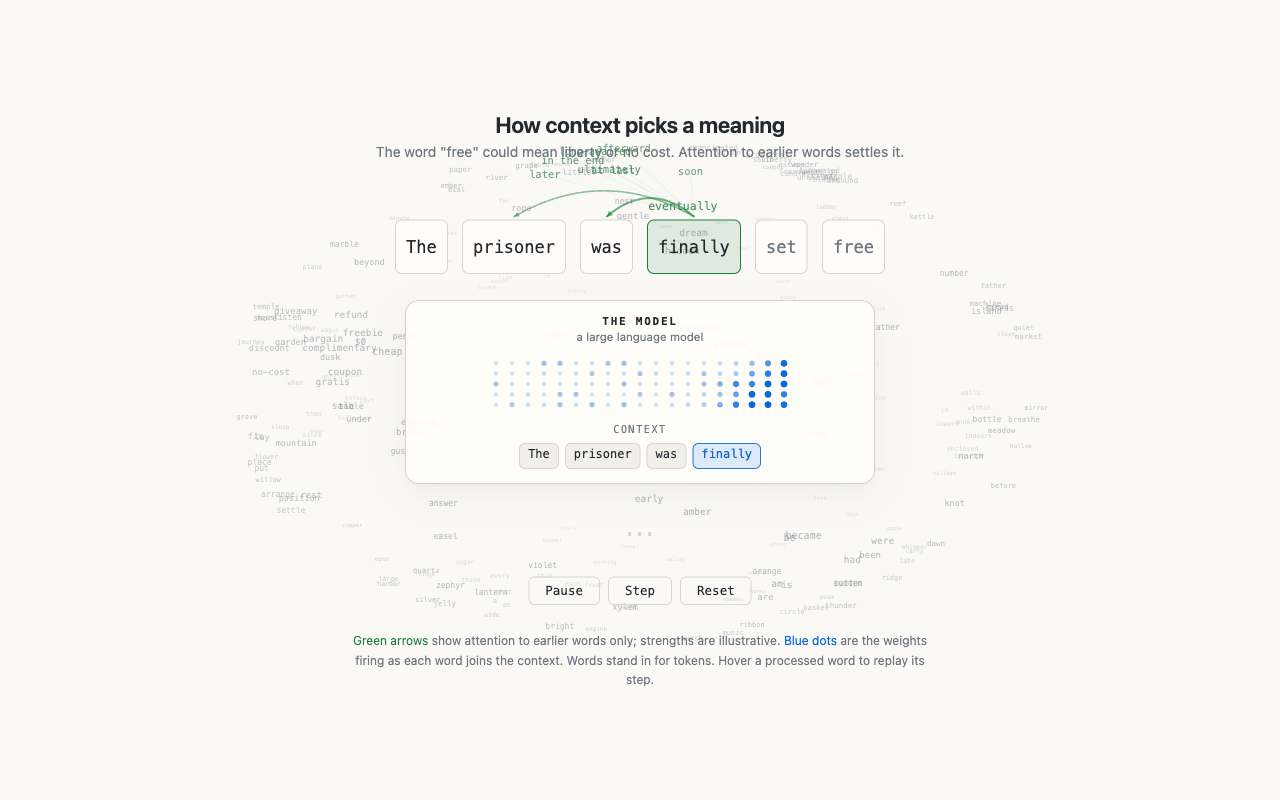 w03 sphere swing
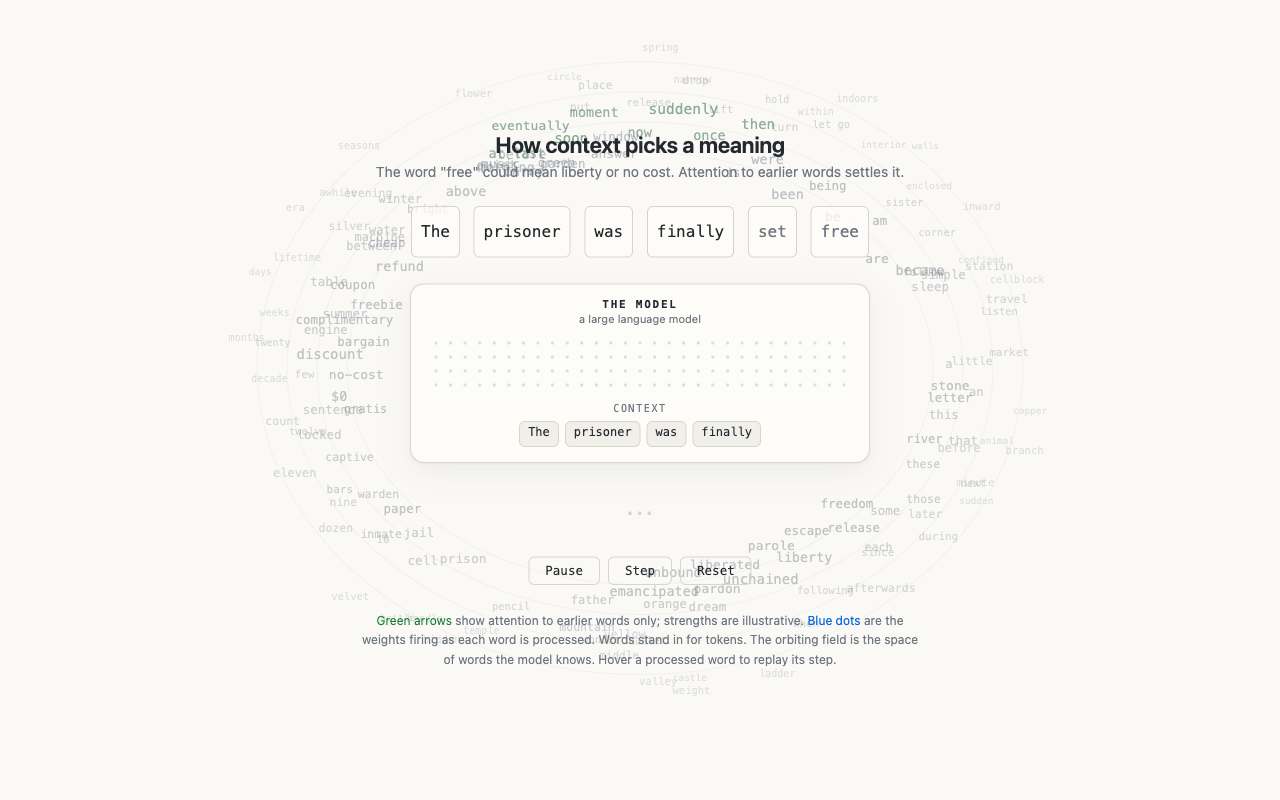 w04 orbit lanes
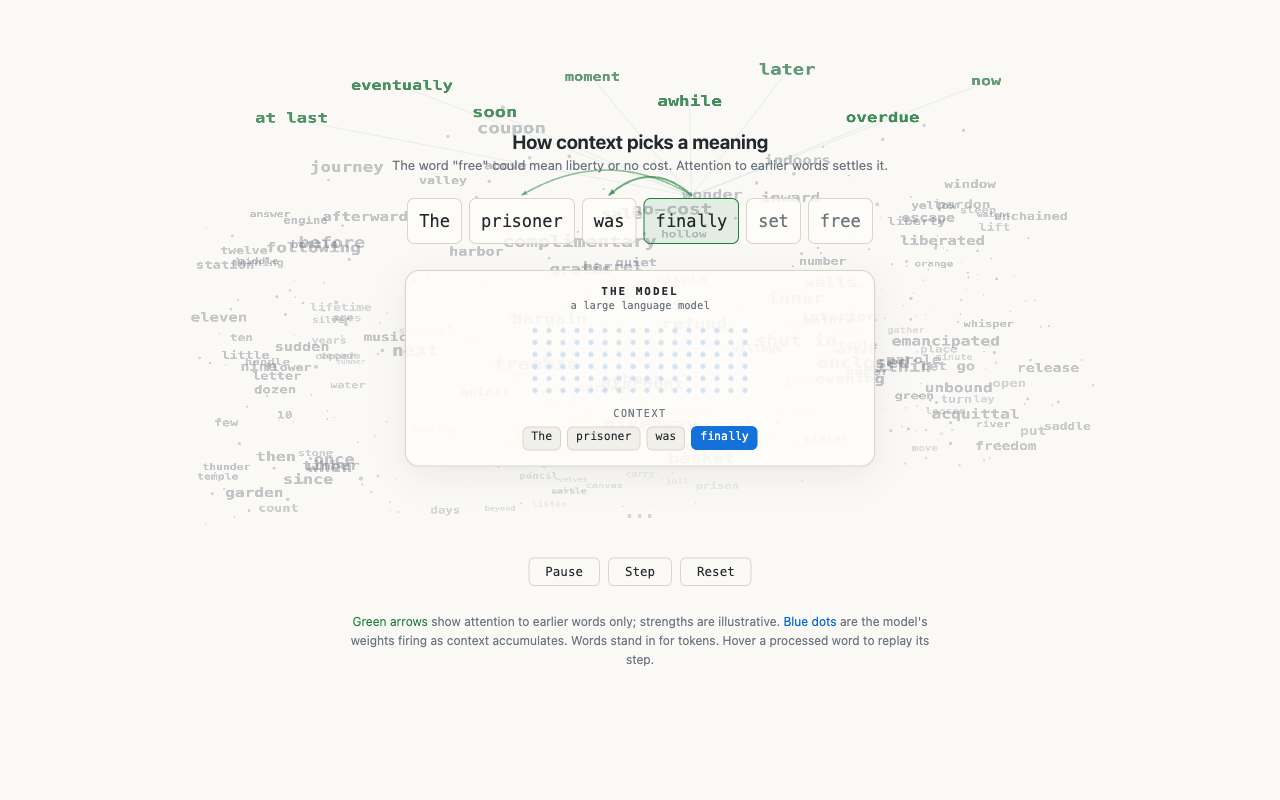 w05 cloud
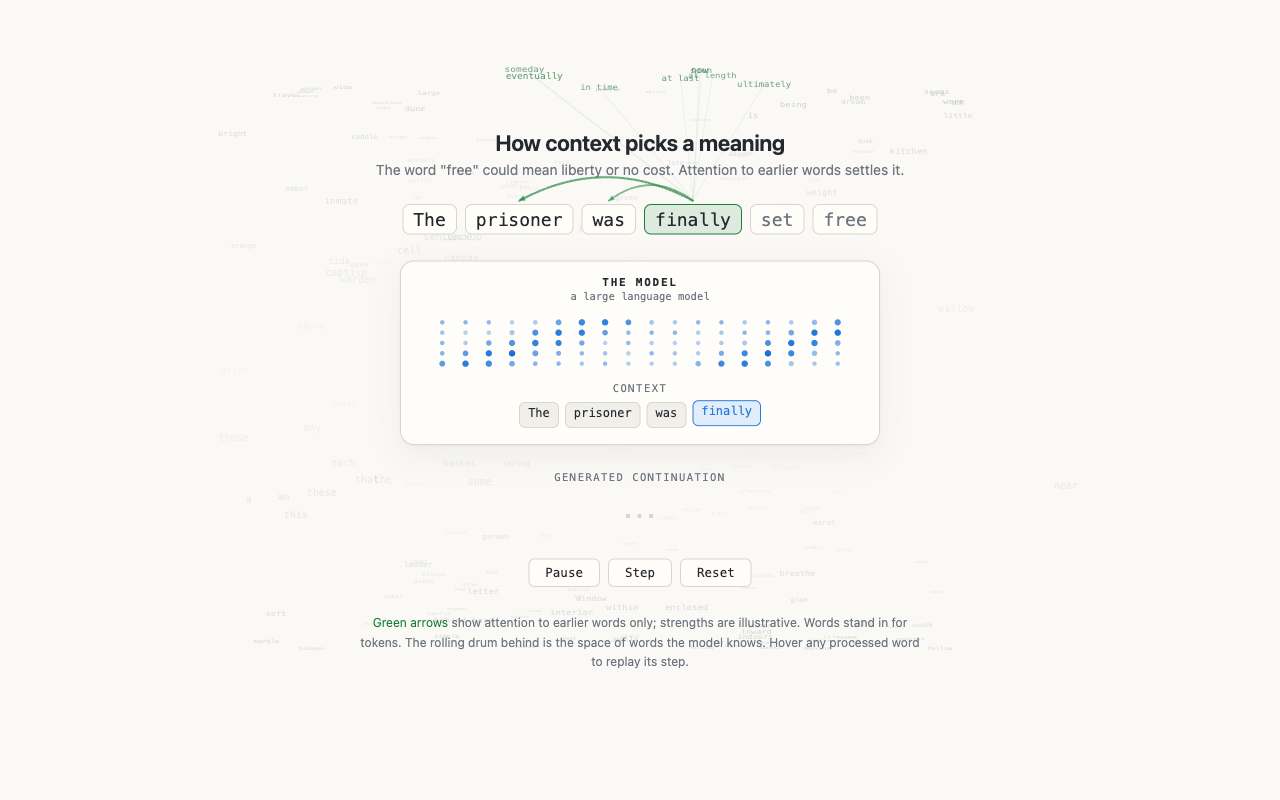 w06 cylinder drum
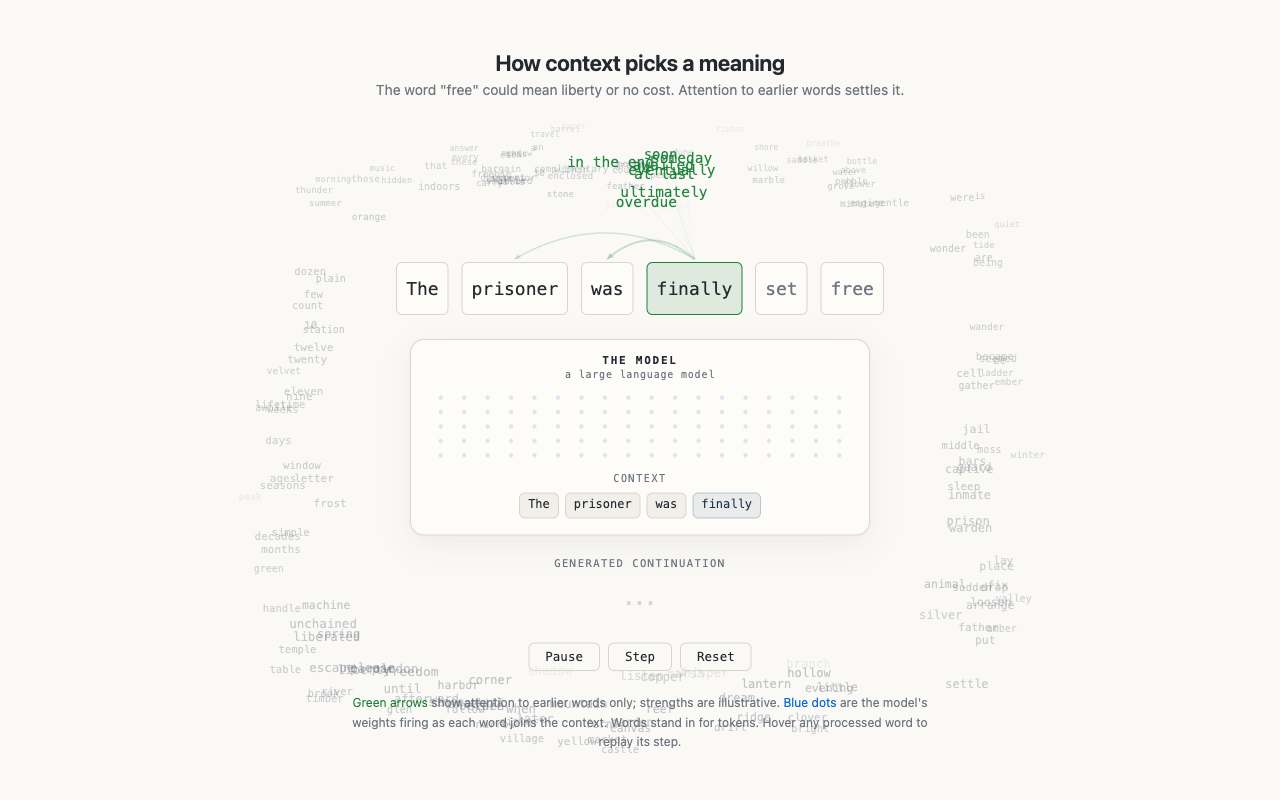 w07 vortex pull
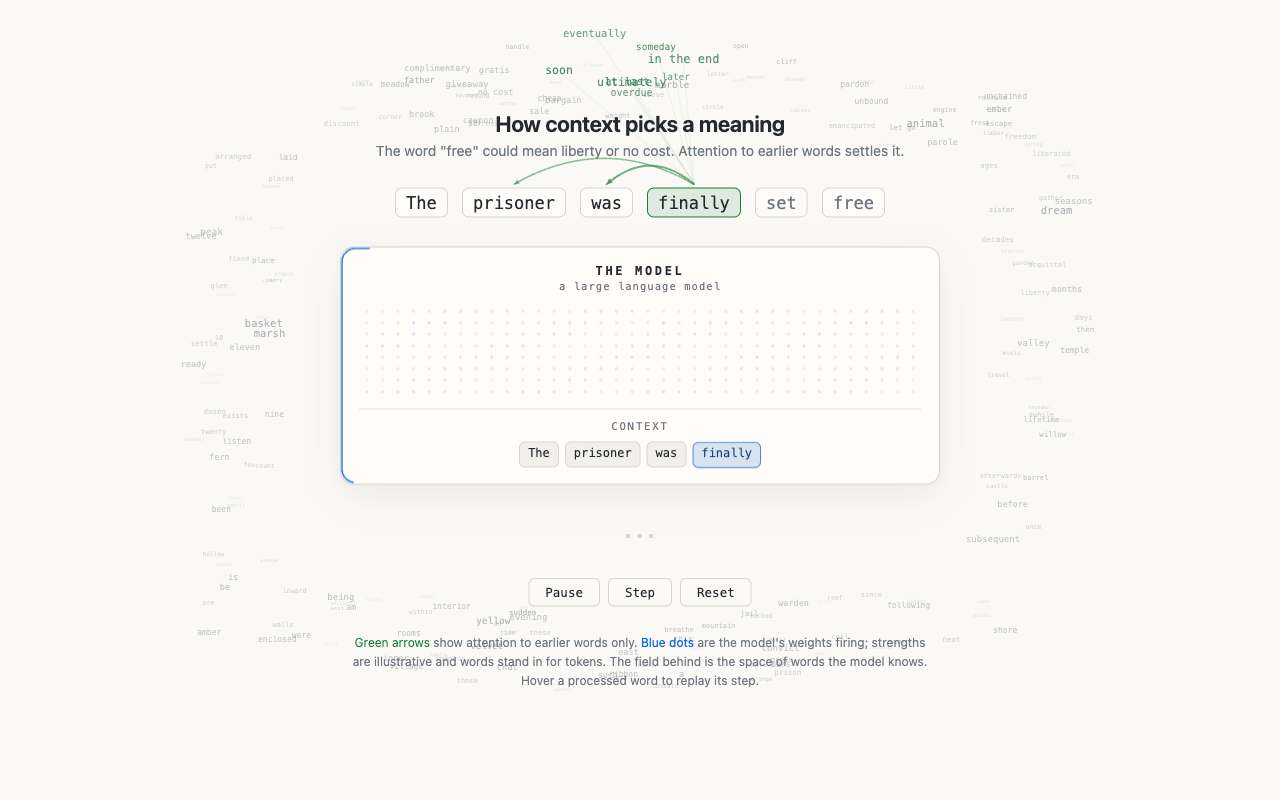 w08 weights hero
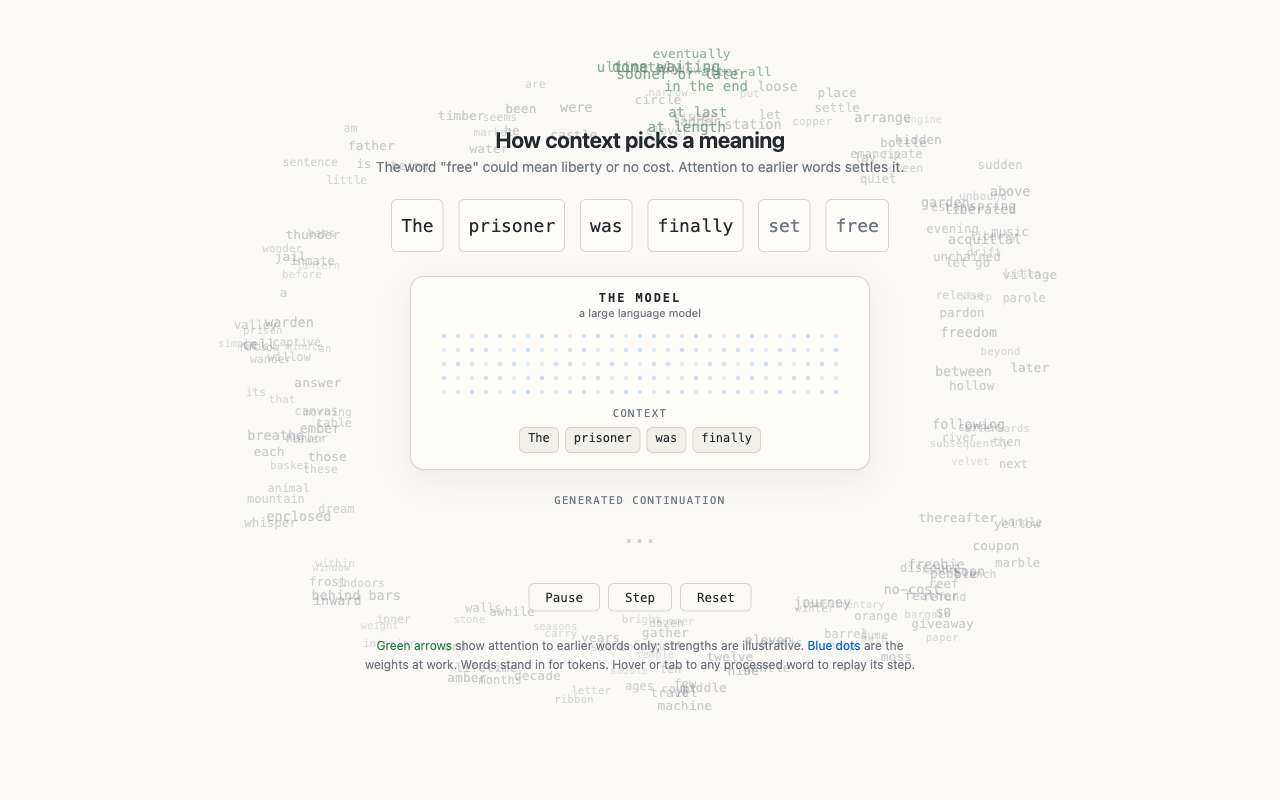 w09 hover hero
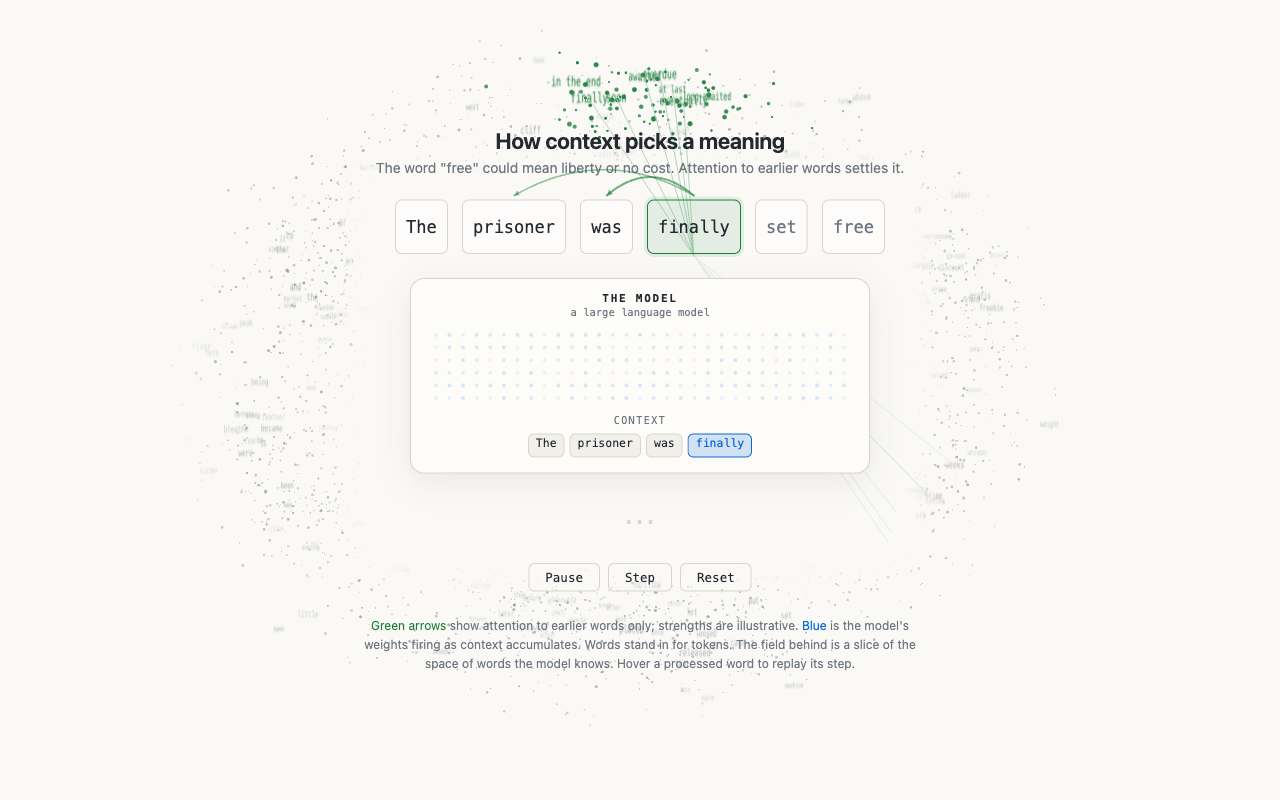 w10 three.js max
3Three experiments on the winner
Each experiment changed one part of the winner: a dense galactic core, active words flying in front of the model, or fixed blue weights lighting up as green word vectors pass through them, with the discussion clarifying what each colour represented.
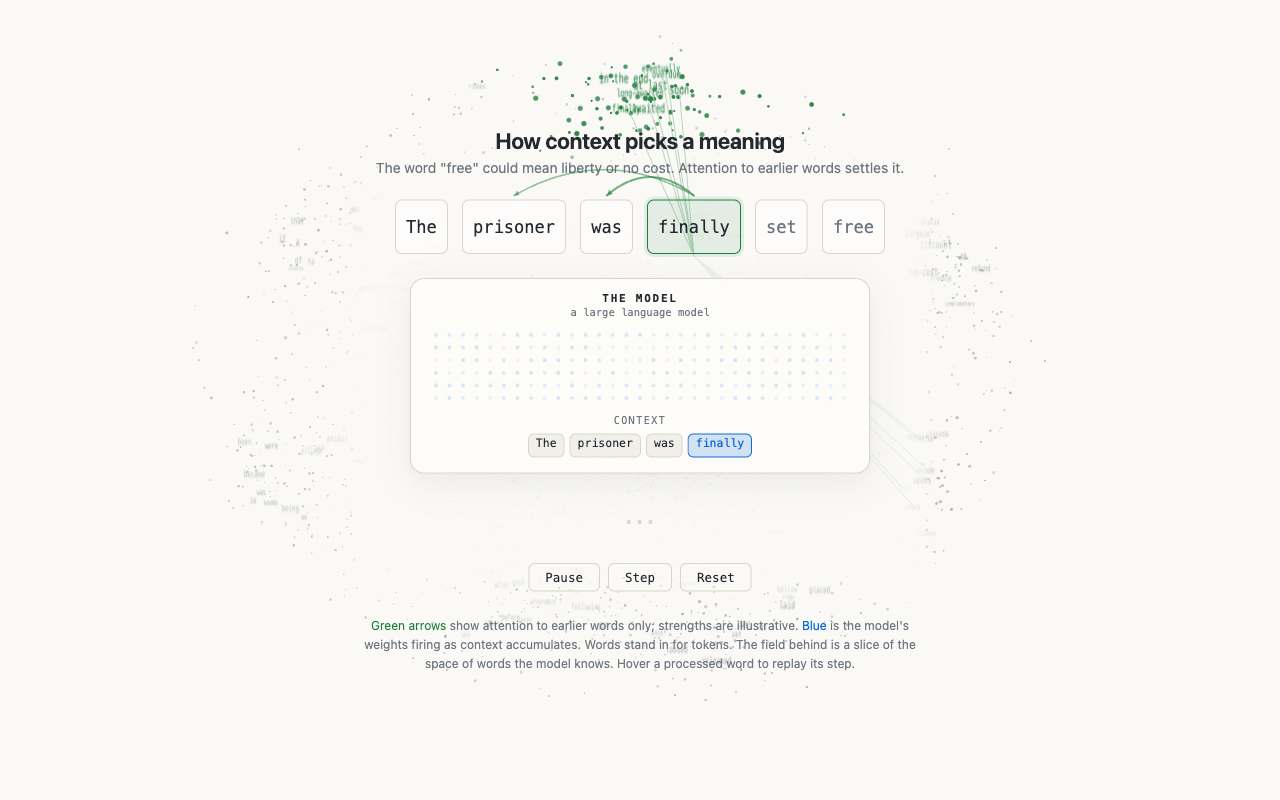 x01 core galaxy
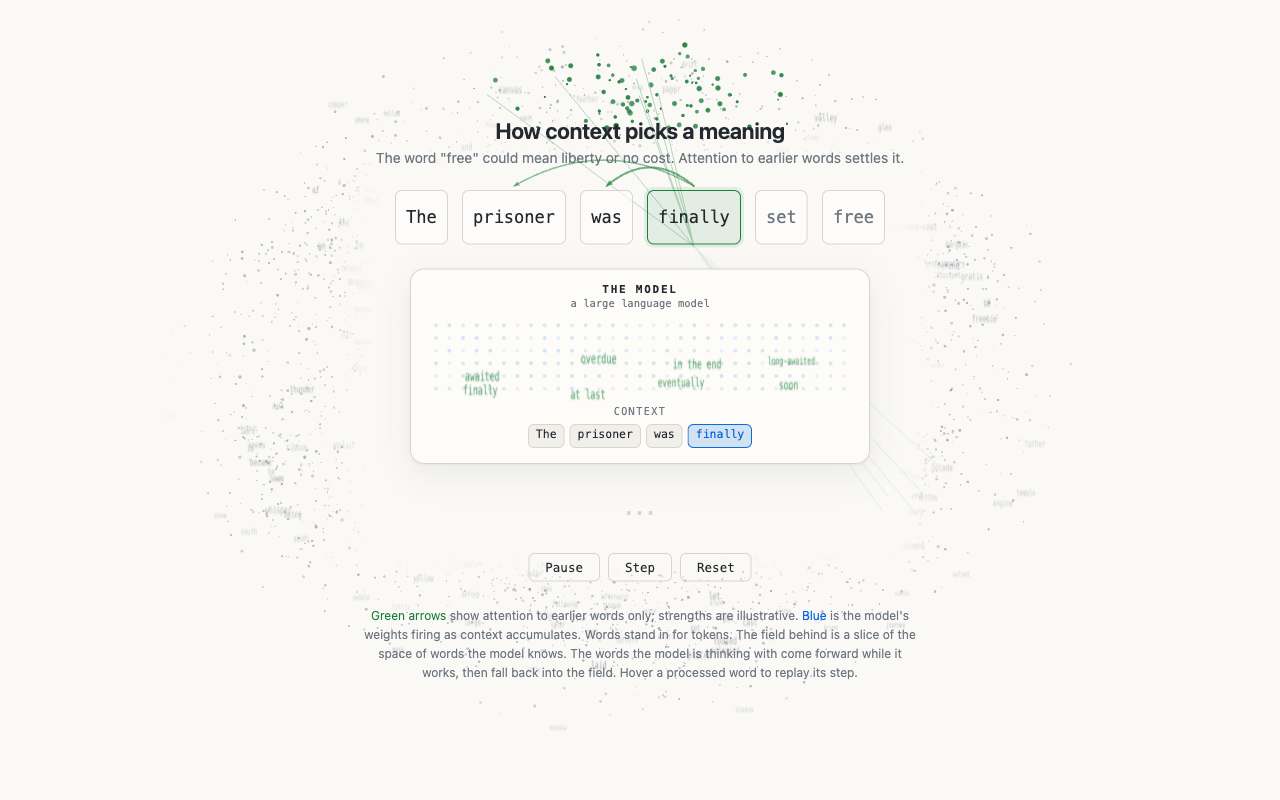 x02 words forward
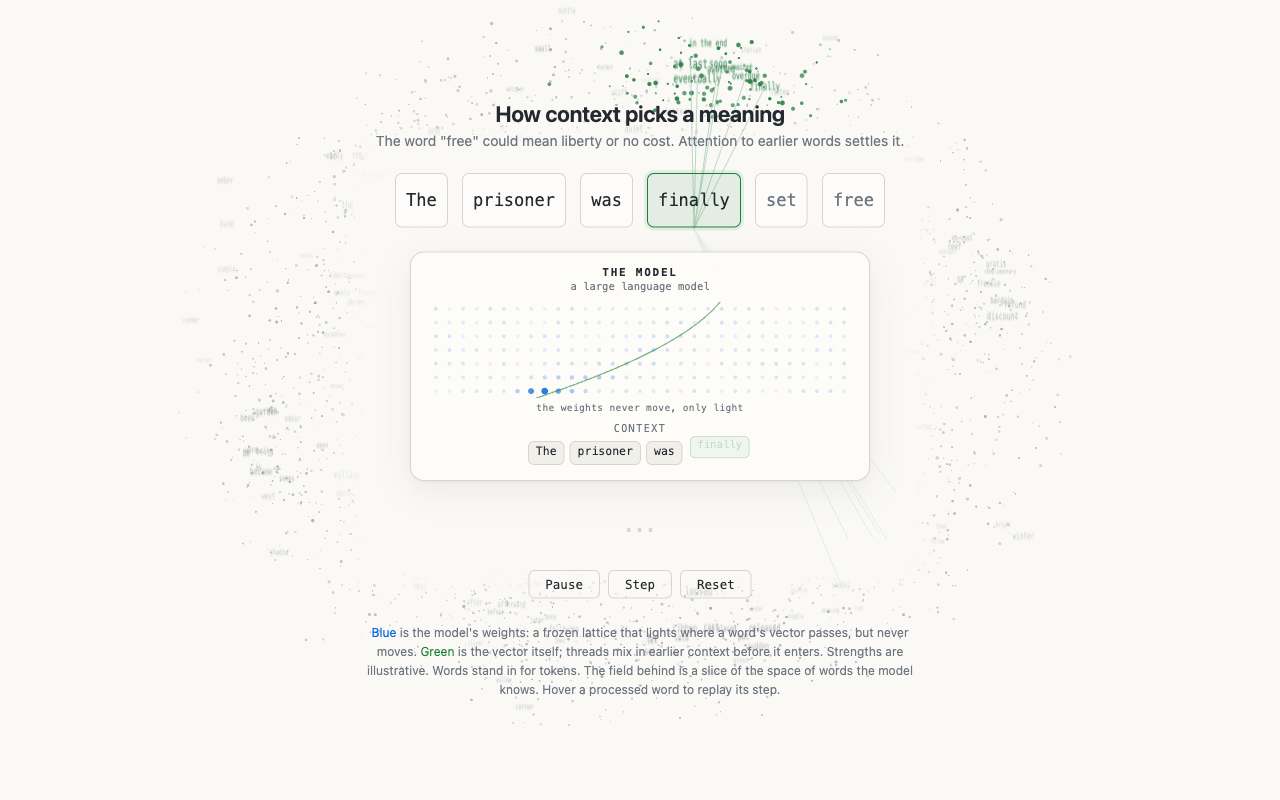 x03 weights transform
4All the notes at once
The next round combined a spherical galaxy behind the diagram, exact step replay on hover, a readable sequence from the selected word through the weights and word space, and a slide-deck scrubber added after the first feedback.
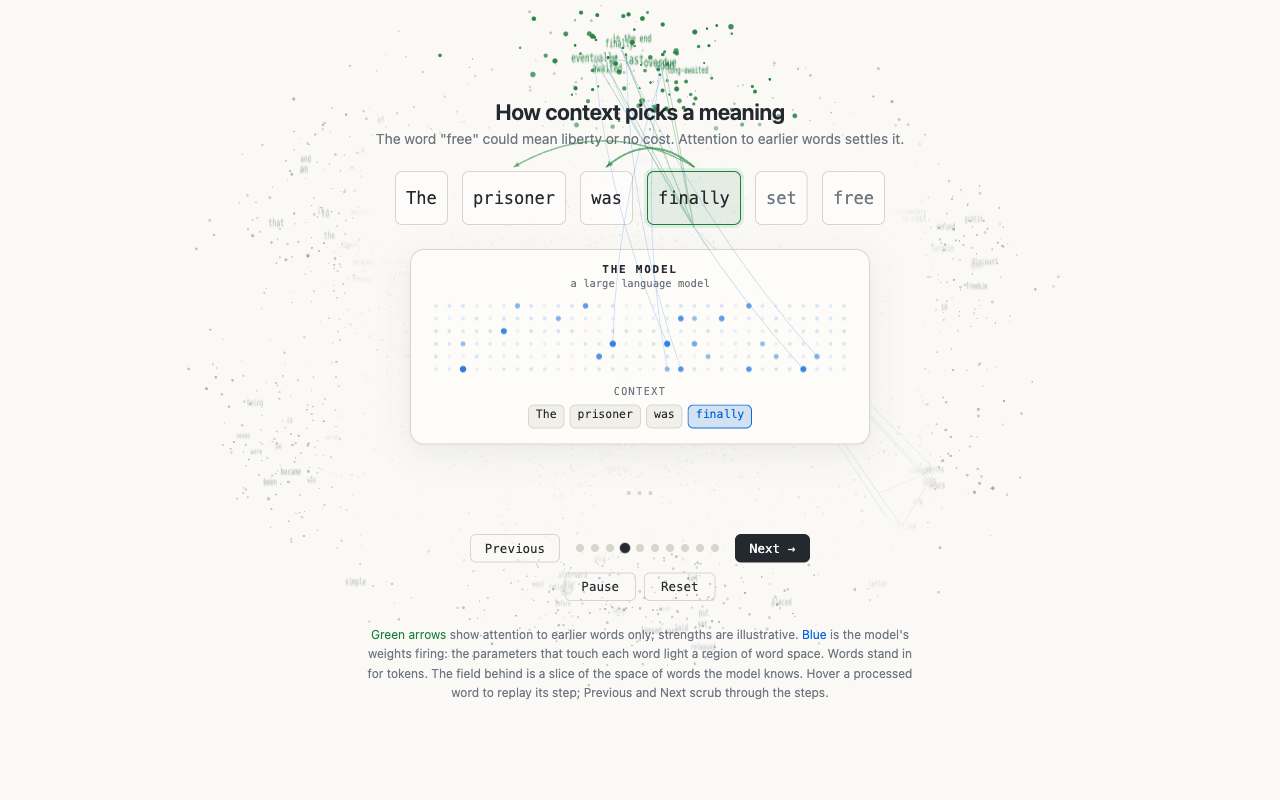 y01 faithful heir
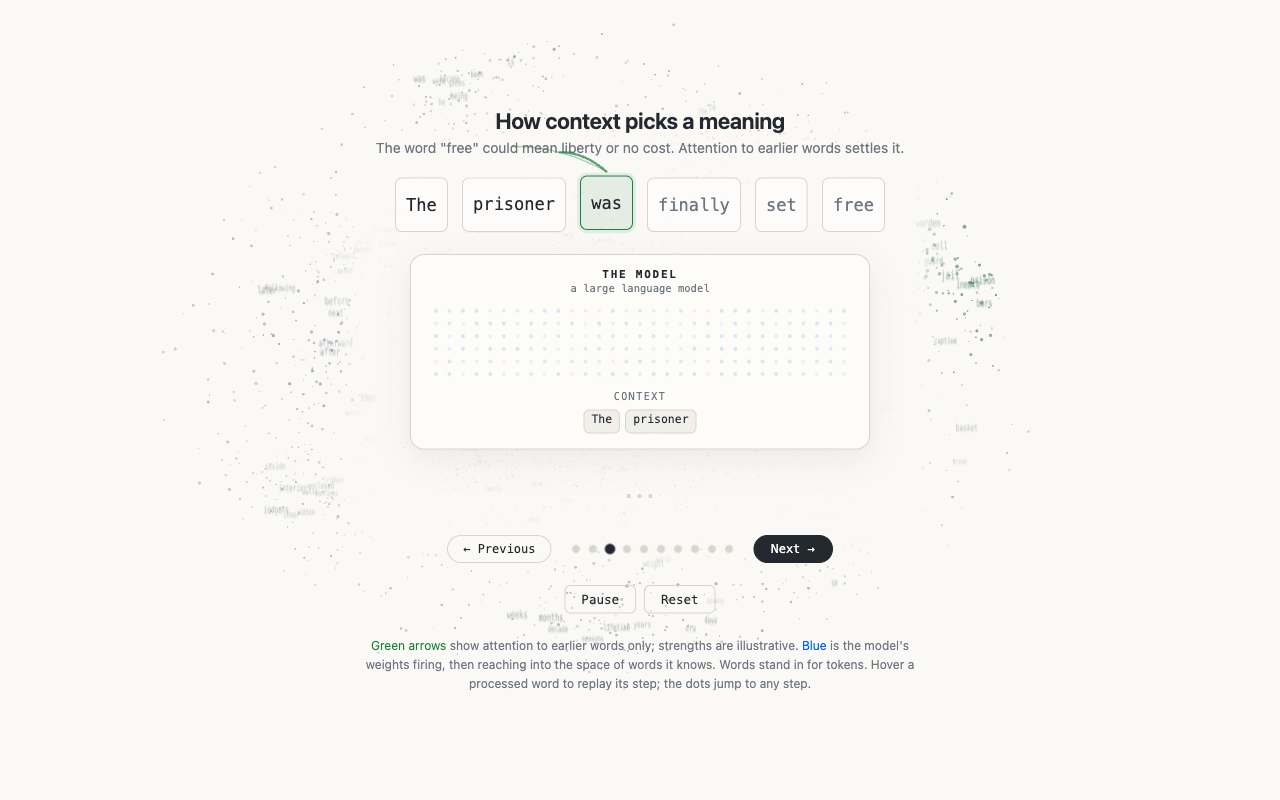 y02 causal theatre
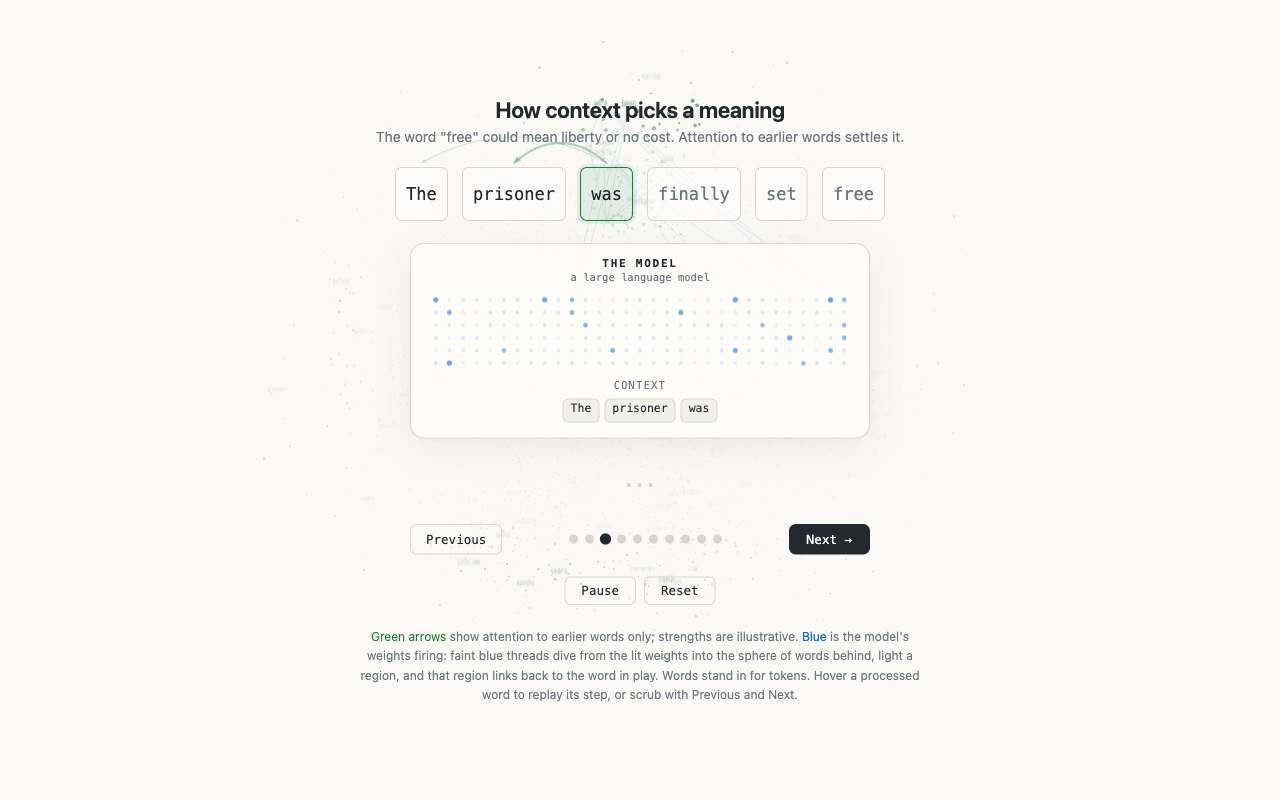 y03 deep sphere
5Fix the hole
An annotated screenshot showed the galaxy masked into a ring around the diagram, so this round placed its densest region behind the diagram, tried both semi-opaque and solid boxes, and removed the idle shimmer from the weights.
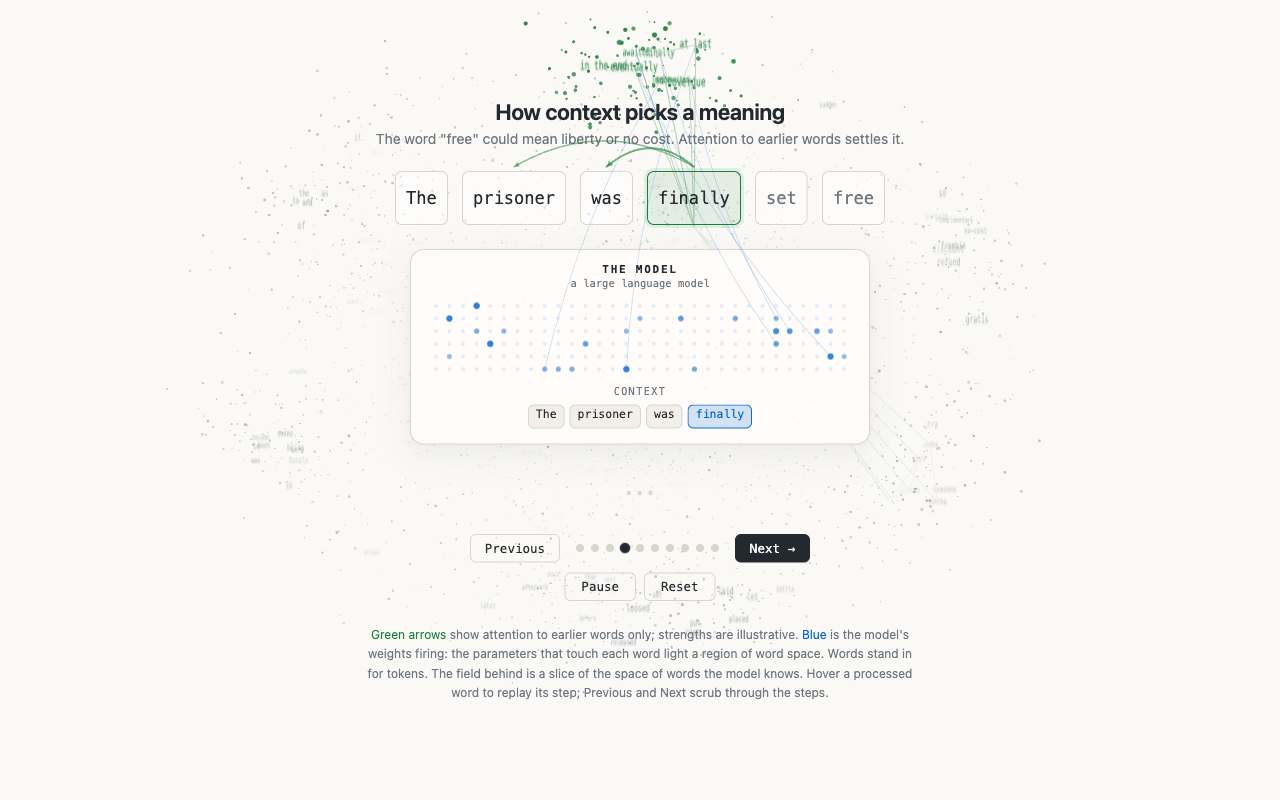 z01 through box
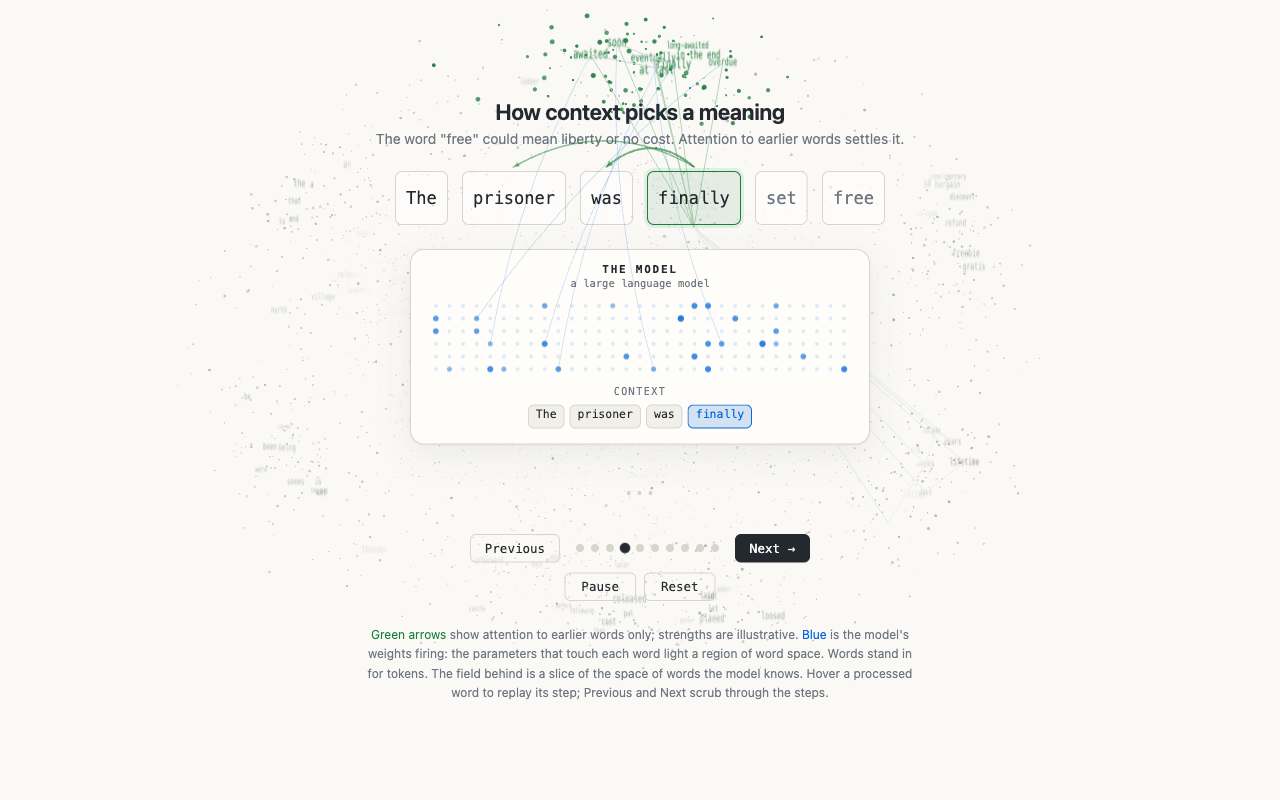 z02 solid box
6Transport controls
This round made every button solid, extended hover replay to every word, replaced waves with sparkles in the weights, and exchanged the word-labelled buttons for a transport bar, with the bolder version becoming the first finished visual.
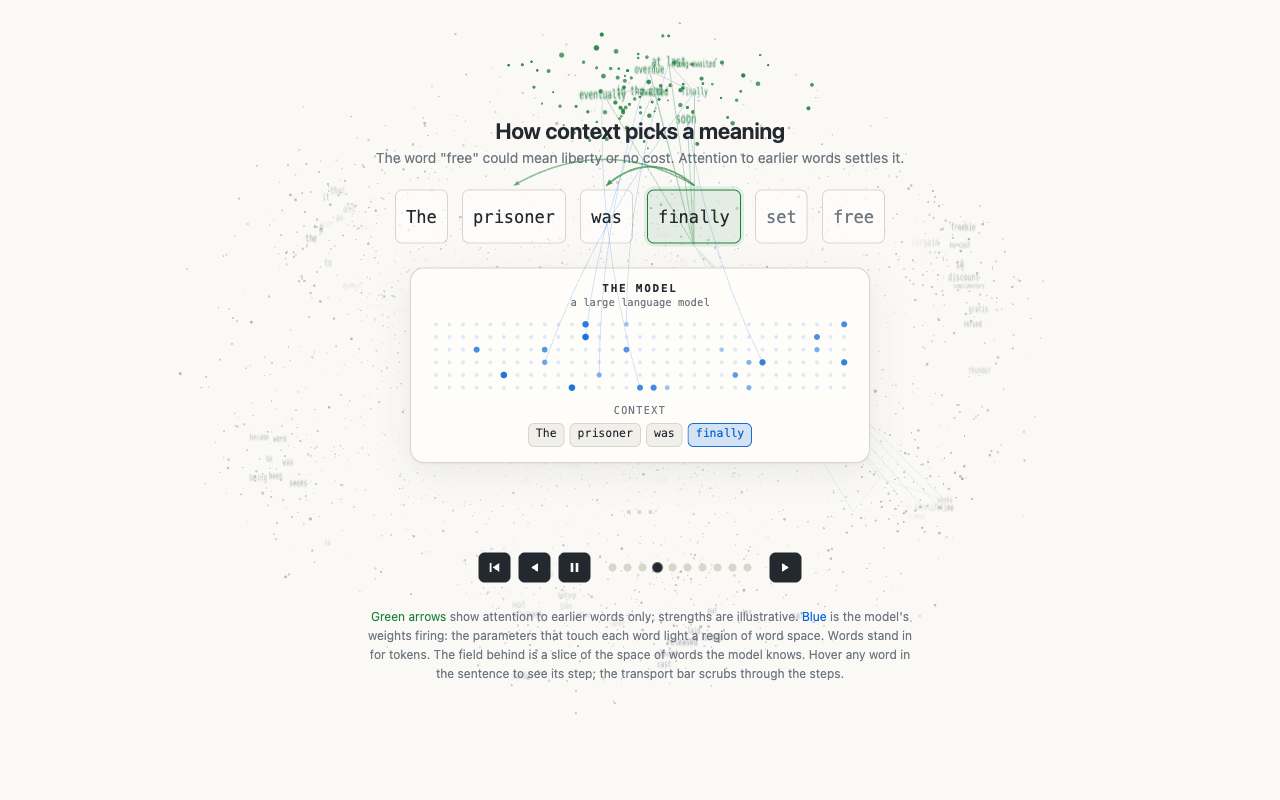 za01 restrained
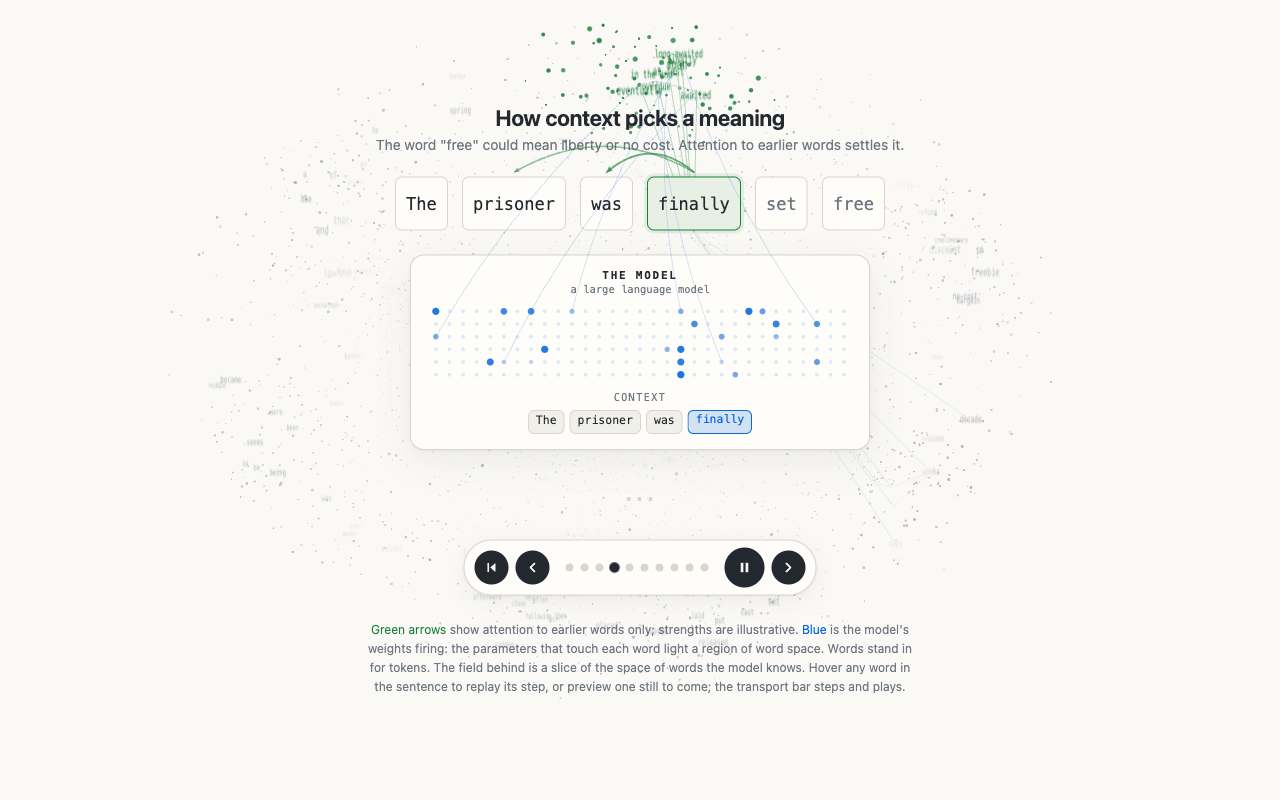 za02 bold · the first finished visual
7A second visual: side by side
A voice note proposed putting the same question to a coaxed LLM and a decision model: the LLM types JSON one character per pass through the weights, while the decision model fires once and stamps the complete answer.
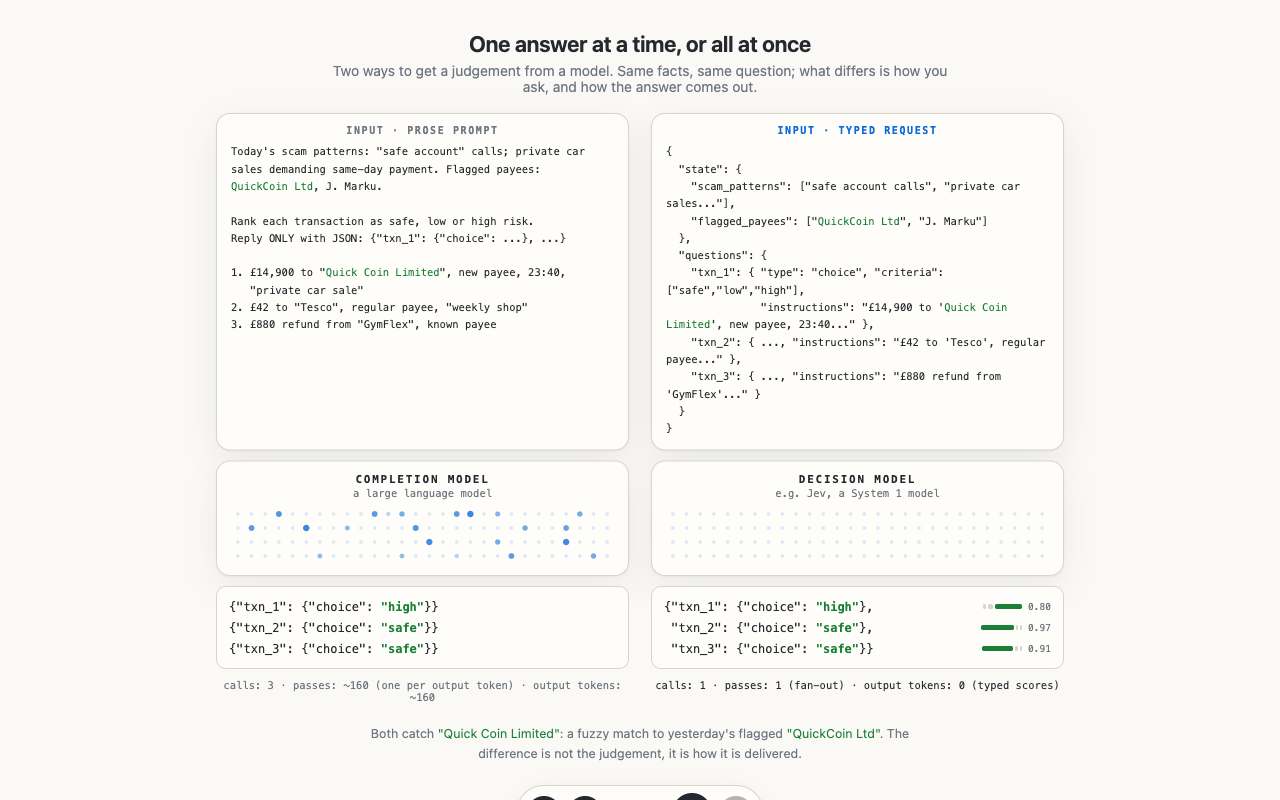 sb01 restrained
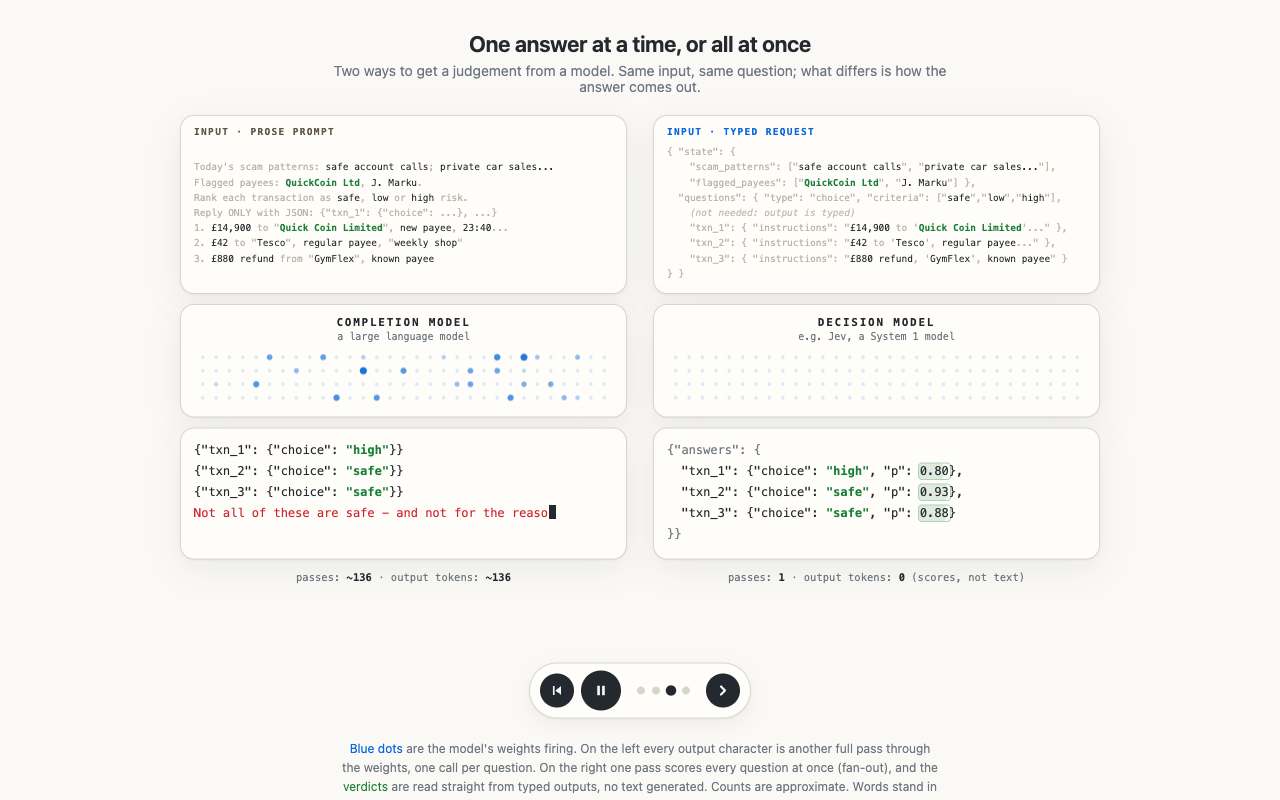 sb02 bolder · the second finished visual
8Five polish turns
Focused edits made the inputs directly comparable, paired corresponding data on hover, kept each row to one line with probabilities inside the JSON, let the LLM drift into a red conversational coda, and revised the transport and probability controls. A last pass swapped in plain titles, removed the explanatory text and tightened the spacing, giving the version now embedded in the article.
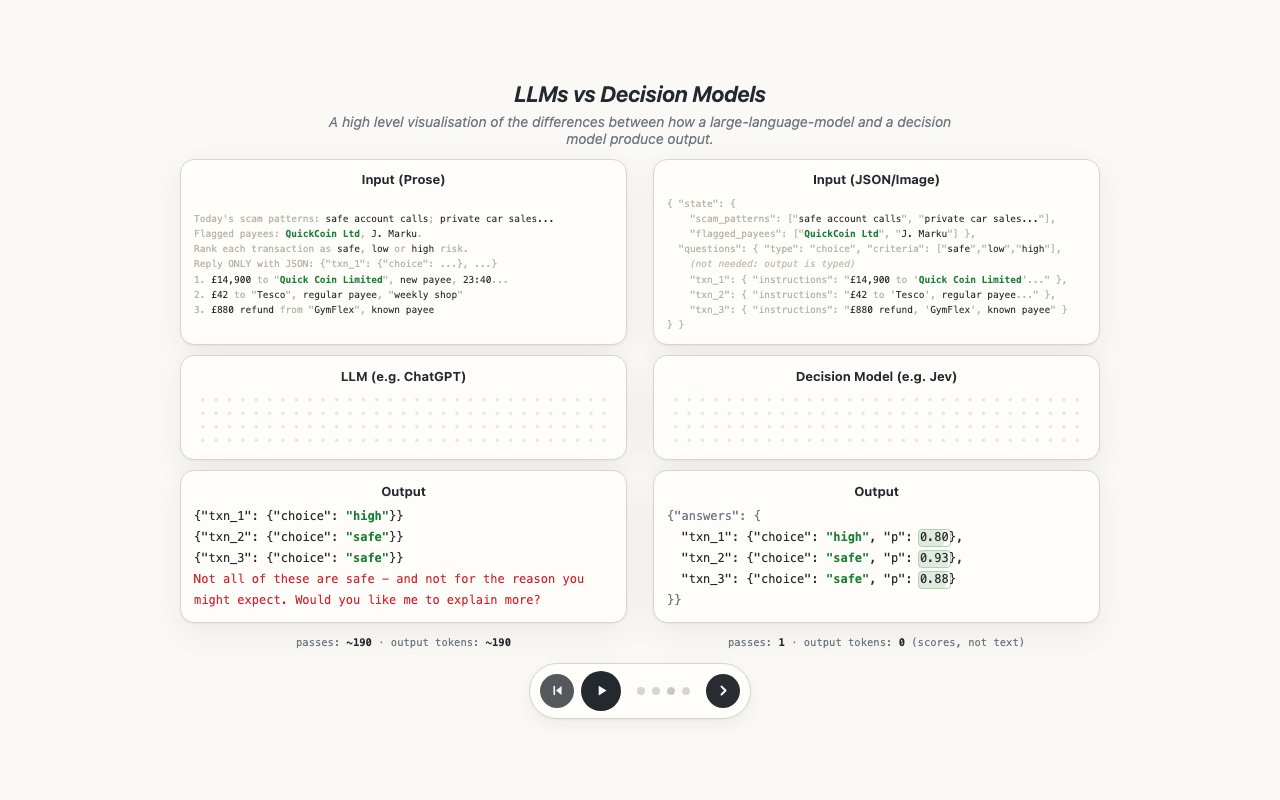 current · embedded in the article
The prose in my articles is handwritten, while the visuals come from a collaboration in which I describe the idea, AI builds candidates, and I review and correct them. I explain the wider process in How I Use AI in Writing.